
Candle Craft 22: Nerve-ous Systems
By Royal McGraw
Royal McGraw has written professionally for film, television, comics, and games for over 20 years. He led development on the mobile smash hit Choices: Stories You Play and currently serves as CEO of Candlelight Games.

Welcome! This is the 22nd installment of a multi-part series on how to improve your writing process and storytelling.
In the previous installment of Candle Craft, we talked about how to make sure that your user interface visually conveys the narrative function of every kind of choice. Writers and designers must work together to ask: “What does the choice do?”
Today, we’re going to explore a similar topic by looking at a recently released PC and console game called Blood of the Dawnwalker.
First Blood
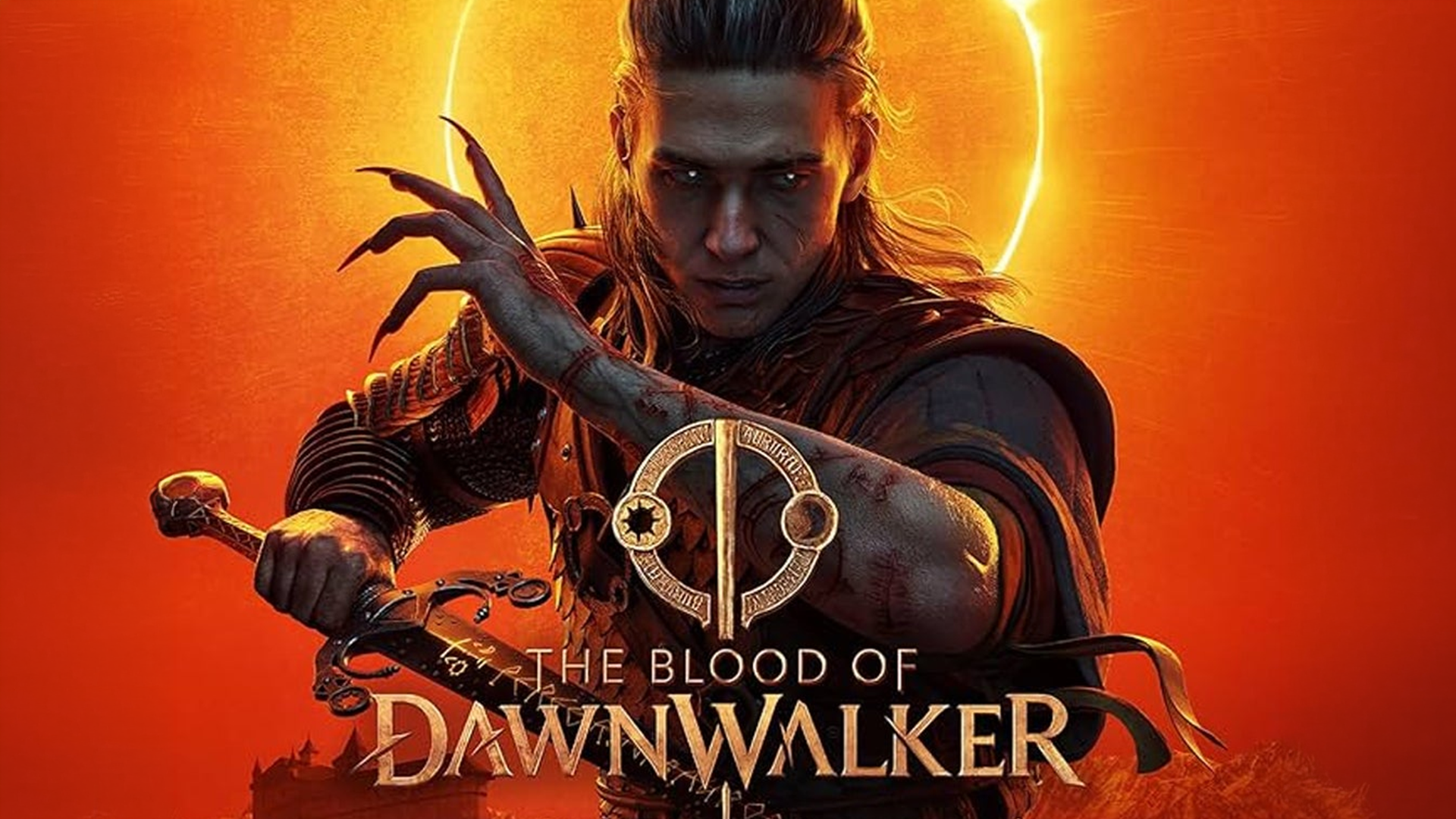
For those of you who are not familiar with the game, Blood of the Dawnwalker is a new role-playing game from Rebel Wolves, a studio founded by former Witcher 3 developers. Since release, the open-world title has become a breakout hit. But not everybody is a fan of one of its core mechanics.
Blood of the Dawnwalker takes place under a strict 30-day limit. Certain actions and quests consume time, and players must spend some of that limited resource resolving the main storyline. By design, players cannot do everything in a single playthrough. Instead, players will see “around 80%”, according to the developers.
Some players have responded to these limitations by complaining online, and some have even gone so far as to mod out the time system entirely.
Now, sorry to spoil the fun, but I’m not here to say anyone is right or wrong! What I do want to do is use the controversy as an opportunity to discuss game mechanics, narrative mechanics, and a few rules of thumb around player sentiment when creating your own games.
Ticking Clocks
If there is a single fundamental rule of storytelling, it is that a ticking clock the audience understands makes everything better. Hitchcock described the suspense version of this effect with “Bomb Theory”.
But the ticking clock can be just as powerful, if not more powerful, when the protagonist is also aware of the time limit under which they are working.
Sometimes the ticking clock is literal. Back to the Future showcases a clock tower. When it strikes 10:04 PM, lightning will strike. If Marty McFly and Doc Brown don’t harness that lightning to power the time machine, Marty will be stuck forever in the past.
But of course, a ticking clock can be anything that serves to visualize how much time is left. For narrative purposes, the gas tank in Speed is also a ticking clock.
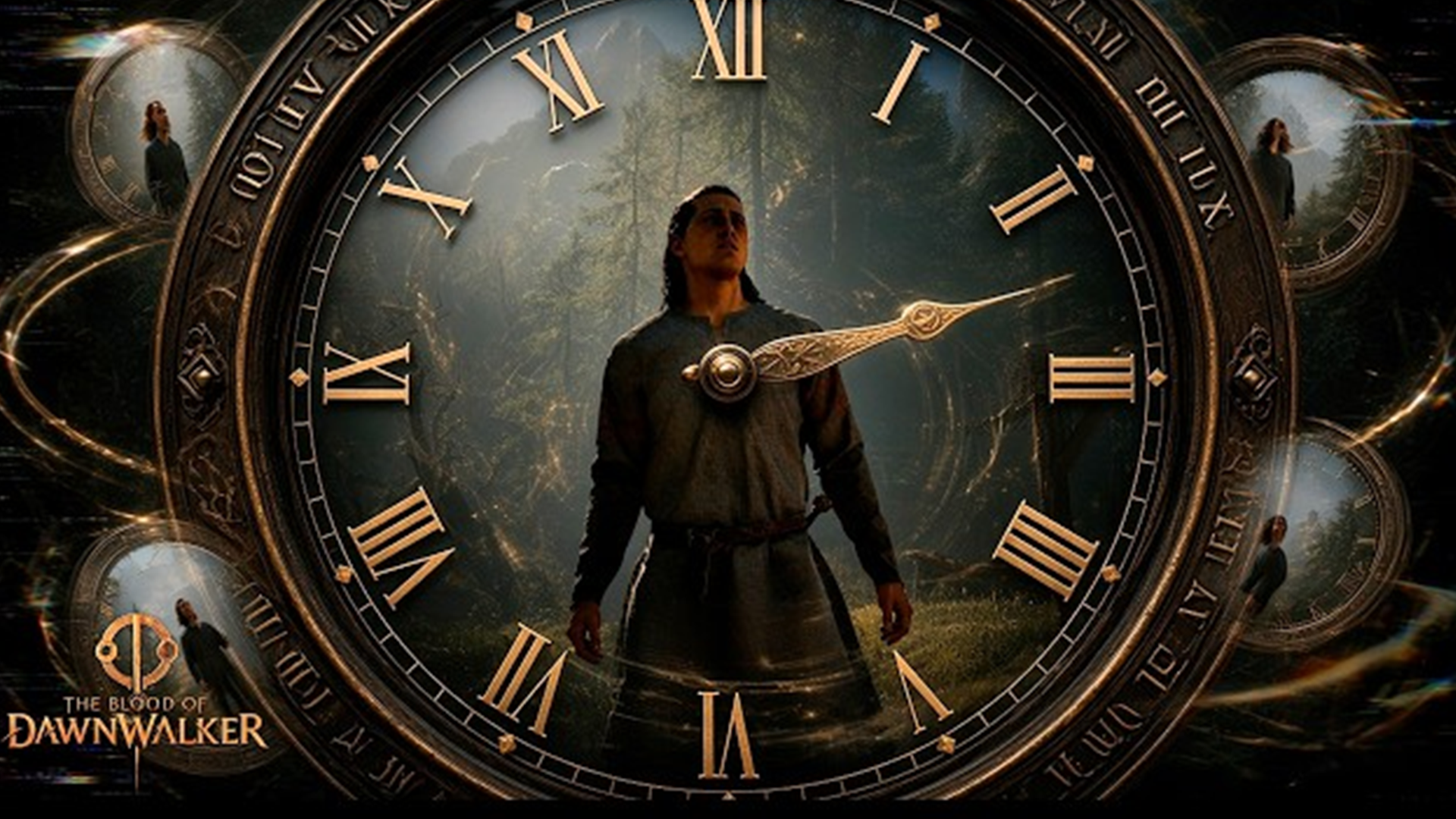
And yes, the thirty days and nights of game time in Blood of the Dawnwalker also function as a ticking clock. More specifically, if Coen does not track down and rescue his family before 30 days have passed, a sadistic vampire lord will sacrifice them in a grisly blood ritual.
So if ticking clocks make stories better, why are people complaining?
Story vs Games
This should surprise no one, but stories and games are not the same. Stories ask us to watch. Games ask us to act.
We love ticking clocks in stories because they make the protagonists uncomfortable. We stress over ticking clocks in games because they make us uncomfortable.
Time limits, health bars, high scores… video games are full of literal and figurative ticking clocks, and they exist specifically to challenge us. All of this means that we should think very carefully about how game mechanics interact with narrative fiction.
The Nerve!
When we were developing It Lives in the Woods at Pixelberry Studios, we had numerous discussions around the creation of the Nerve System. In It Lives in the Woods, each character starts with a Nerve score of 100. Over the course of the game, characters’ Nerve scores deplete as they witness terrifying events, sustain injuries, or deal with emotional trauma. If a character’s score reaches zero, that character dies.
On the one hand, we knew that this system neatly paralleled the fraying sanity characters experience in horror fiction, especially the works of Stephen King and the Cthulhu Mythos. On the other hand, we knew we’d be asking players to personally endure loss after loss after loss.
Along the way, we explored a variety of other systems. Ultimately, we decided on the Nerve system that shipped because we felt it was the best fit for the narrative and paired well with the character deaths we expected most players to encounter.
The game story was about horror and loss. The game system supported those emotions. The discomfort was the point. Would some players prefer It Lives in the Woods if the Nerve system were “patched out”? Yes, almost certainly.
But no game is for everyone. A creator needs to make the best possible game for their target audience. As a result of strong writing and bold design decisions like these, It Lives in the Woods has enjoyed a long life within the Choices fandom.
Back 4 Blood
Returning to Blood of the Dawnwalker, would I personally say that including the 30-day system was a mistake? Of course not.
Not every controversial design decision is a design mistake. Often, what we’re looking at is a design trade-off.
However, I would say that pairing this particular system with an open world will necessarily create a bit of cognitive dissonance for some players. Open worlds teach us to explore, investigate, and accumulate possibilities. Time-management systems teach us to evaluate, prioritize, and let possibilities go.
Meanwhile, Blood of the Dawnwalker turns discovery into a decision. You are set loose to explore a world full of interesting things and then asked to decide which of those things you are willing not to do.
More succinctly: every game system teaches players how they are expected to behave.
Here, the open world encourages one kind of behavior while the ticking clock encourages another. That tension is not necessarily a flaw, but it is something the designers have deliberately asked the player to feel.
Looking Into Your Own Work
As you craft your own games, take care to understand the methods by which your story cultivates engagement and the ways in which your game cultivates engagement. You should be able to succinctly explain why the narrative works, why the design works, and why those two systems work together.
In an ideal world, you’ve got chocolate and peanut butter: two different ingredients that become even better when mixed together.
But remember: you don’t need to resolve every conflict.
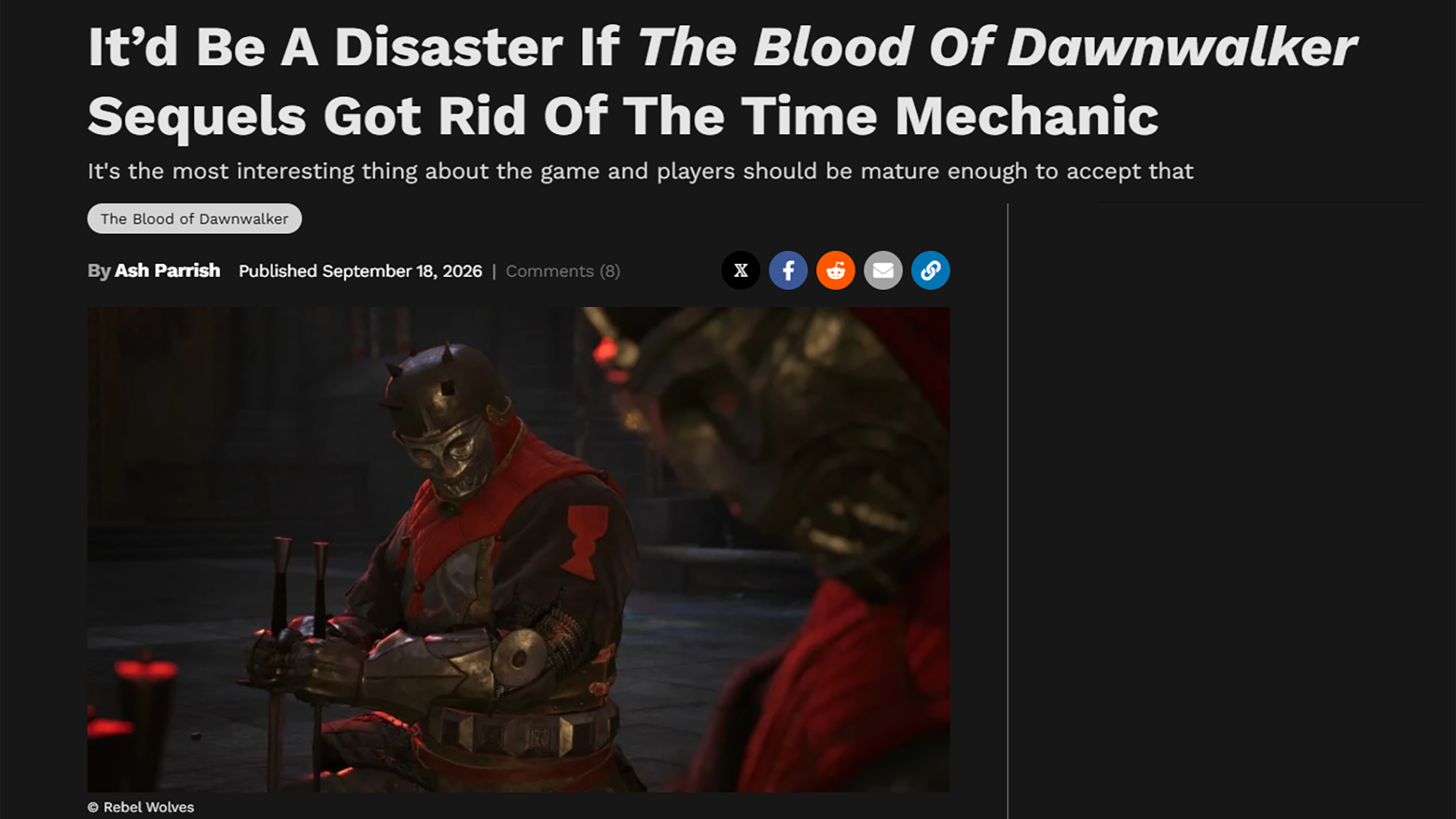
Would removing the time-management system have made Blood of the Dawnwalker more successful? That’s impossible to know, but I personally don’t think so. When two systems pull the player in different directions, that isn’t necessarily a design problem. The question is what happens in the space between them.
Horror asks us to preserve characters we know we may lose. Survival games ask us to value scarce resources. Blood of the Dawnwalker gives us a world full of possibilities and then asks us which of those possibilities we’re willing to abandon.
That’s definitely not chocolate and peanut butter. But it is interesting. And sometimes the ingredients should clash.
Sometimes mixing together unexpected flavors creates something genuinely fresh and exciting.