
Candle Craft 16: Interface Feedback
By Royal McGraw
Royal McGraw has written professionally for film, television, comics, and games for over 20 years. He led development on the mobile smash hit Choices: Stories You Play and currently serves as CEO of Candlelight Games.

Welcome! This is the 16th installment of a multi-part series on how to improve your writing process and storytelling.
A few weeks ago, I stumbled across an article on GameDeveloper.com called “Opinion: When choice becomes a metric, narrative design suffers.”
The subhead reads: Professor and game developer Nicholas O'Brien argues for subtlety in player choice and consequence, versus the "Clementine will remember that" route: "By overtly validating a player’s choice as 'mattering' you unintentionally subvert their agency," he says.
I encourage you to read the article, and also to visit the Steam page of his narrative game The Last Survey. I’m not going to directly address the text other than to use the topic, a few lines of text, and the conclusions O’Brien draws as a springboard for my own thoughts on the subject. This essay will be in two parts, and spoiler alert, I draw some pretty different conclusions.
Civility and Differing Perspectives
But before we go any further, I don’t want this article to come across as a pile-on. O’Brien makes good points in his article, some of which I might even have made earlier in my career.
And to no small degree our differences in point of view could be summed up as “What is the purpose of art?” O’Brien appears to come from a place of advocacy, i.e. his chief concern is expressing a point of view persuasively. In contrast, I come from a place of entertainment, meaning my chief concern is player enjoyment, and I believe that my opinions are useful only insofar as they further that aim.
These are pretty different points of view, and as such, it’s to be expected that we might disagree on some things. And yeah, we disagree on a bunch.
Customer Feedback
In the article, a playtester provided O’Brien with two reasons why they thought the Choices Matter tag was improperly applied to The Last Survey. They were:
The Last Survey didn’t immediately communicate that choices had direct consequences
Regardless of choice, the game didn’t provide much opportunity for replay value.
Player feedback is always important, but exceptional player feedback like this is rare and to be treasured.
Quickly and succinctly, this playtester has brought up two of the most important and foundational ideas of interactive narrative: interface feedback and replay value.
Interface Feedback
You can trace back the inspiration for most interactive narratives to game books. The most widely known of these are Choose Your Own Adventure books. When you made a choice in one of these books, you flipped to the page it told you to go to.
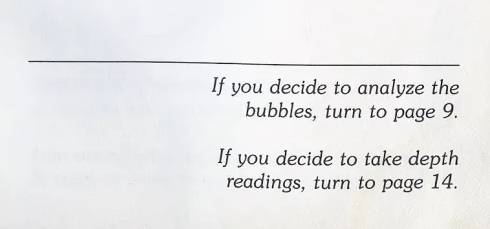
This act of flipping to a page in a book is interface feedback at its most fundamental level. If you flip to page 9, you didn’t flip to page 14. If you flipped to page 14, you didn’t flip to page 9.
Intuitively, we understand, even without comparing the resulting prose, that the outcomes on those two pages must be different. They’re different pages! The interface feedback of Choose Your Own Adventure books is immediate and clear.
Paradoxically, in videogames, we must go to extra lengths to get the same kind of intuitive feel that a gamebook just has by virtue of it existing as a “less-advanced” physical medium. In games, we must code buttons with hover and press states. Conditional branching is hidden from the player by default. In short, we need to apply effort to make interface feedback visible.
Tackling this problem of interface feedback is exactly how a designer might stumble upon a solution like a UI Toast that states “Clementine will remember that”.
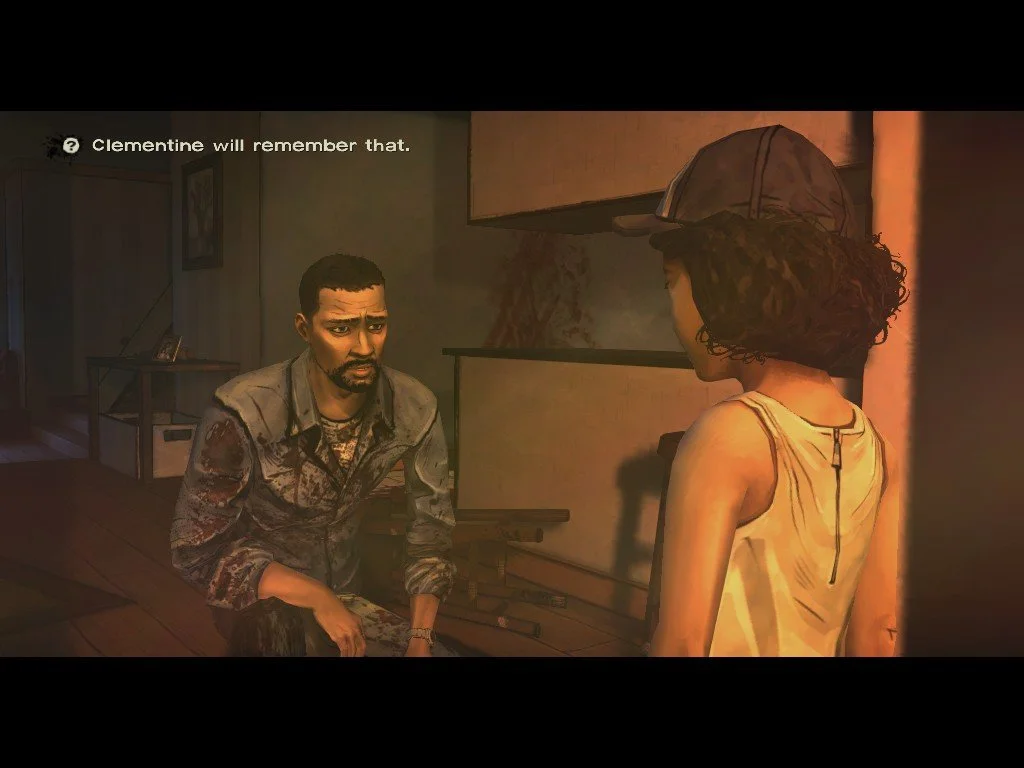
Perhaps a little clumsy, sure, but this technique is immediate and clear.
We should take a moment to acknowledge that nothing I’ve discussed here relates to story, or to outcomes, or to narrative in any way – just the feeling you get when you physically make a choice. Here is where I want to make a very strong statement:
A fundamental tenet of good design is responsive feedback.
In the realm of UI/UX, designers aim for a response time under 100 milliseconds. Users react negatively to anything slower than that. They may think the software is “buggy” or “broken”. In narrative design, we have a bit more time, but the aim is the same: we need to validate the choice that the player made as quickly as possible. Or in other words,
a player makes a choice, and then
we let the player know that we know which choice they made
This is a call-and-response.
There are, of course, many ways to do this. Games like Too Hot to Handle (Netflix) use emojis for emotional quantification. When you make the corresponding choice, the icon flies down to a thermometer. That measures a stat, sure, but it’s also unambiguously honoring player intention. Or in other words: immediate and clear.

In Mass Effect (EA), Renegade/Paragon stat choices fill their respective meters. This is somewhat delayed feedback, but still very clear.
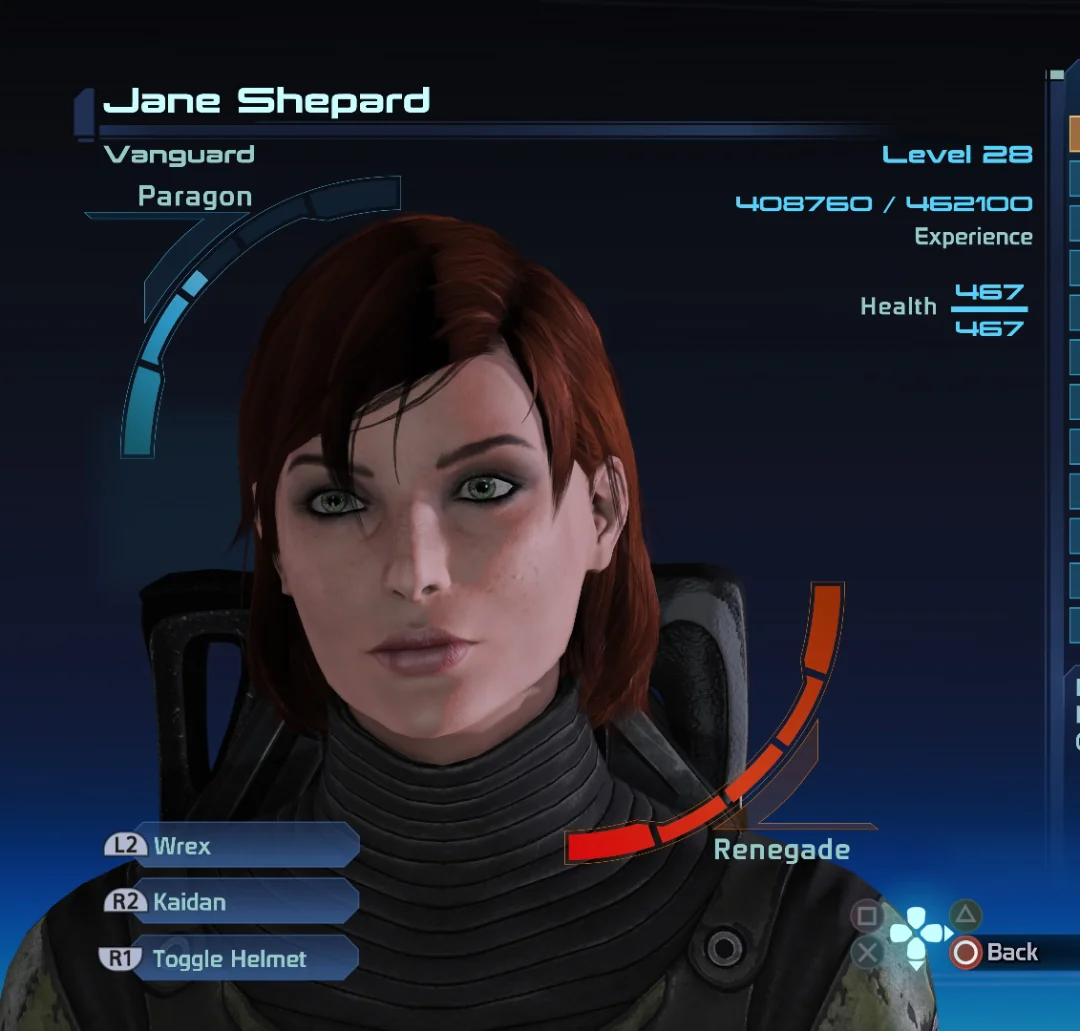
From a narrative design perspective, these kinds of stat choices are extremely useful when the story content is ambiguous. They can also communicate that small choices, even seemingly unimportant ones, are leading to something bigger.
Pulling back a little, we should note that both of these games also include choices that do not visibly touch stats. In those cases, the interface feedback is entirely shouldered by the narrative… and if done artfully, that can work too. There are many ways to achieve the same result.
TAKEAWAY:
The very first level of interactive narrative design is physical: interface design. Choices must be acknowledged, and the result of that choice must be immediate and clear. Or in other words:
Every choice should have a direct and observable consequence.
Next Time: Replay Value